
What is Environmental Education and Why Does It Matter?
Before we explore how to teach environmental education, let’s begin with a simple question:
Why is this course important?
The answer lies in the reality young people face today.
What the Evidence Tells Us
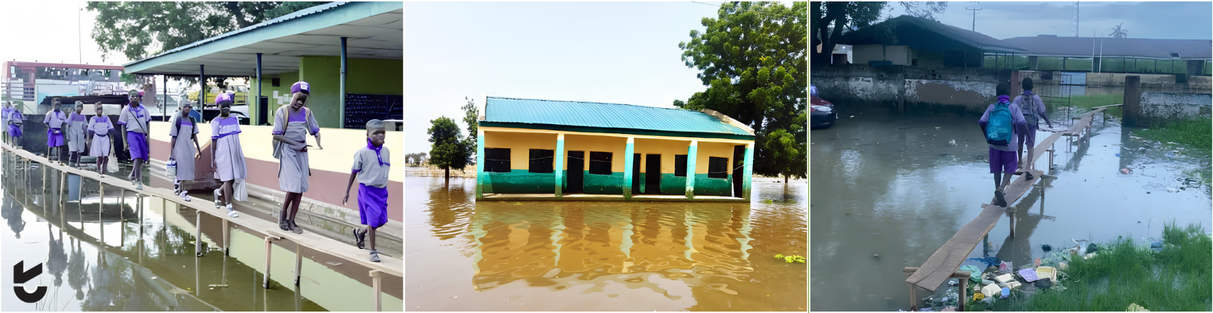
Children will face the greatest impacts of climate change
According to Save the Children (2021), children born today will experience far more climate-related disasters than previous generations, including:
- Seven times more heatwaves
- Twice as many wildfires
- Three times as many droughts, crop failures, and river floods
Climate change is already affecting education
UNICEF (2023) reports that climate disasters disrupt the education of nearly 40 million children every year, and this number continues to rise.
Yet despite these realities, education systems are struggling to prepare young people for the environmental challenges ahead.
Climate education remains limited
The Global Education Monitoring Report (2023) found that:
- Only 39% of countries have a national law, policy, or strategy specifically focused on climate change education.
- Only 63% of teacher-training plans include climate change education.
Environmental learning outcomes remain low
According to the Global Education Monitoring Report (2021), only 30% of students are proficient in environmental science.
Many teachers want to teach climate change but feel unprepared
UNESCO (2024) found that while 95% of teachers believe climate change should be taught, fewer than 30% feel ready to teach it.
What We Found in Nigeria
Through our Green Educators Survey, we found similar trends among Nigerian educators:
- 60% of teachers reported feeling concerned, anxious, or overwhelmed by environmental issues.
- 86% of schools reported environmental risks within their communities, including flooding, erosion, blocked drainage systems, waste pollution, water pollution, air pollution, and extreme heat.
- 61% of teachers had received no prior training in environmental education.
- 44% had never taught environmental education lessons to their students.
These findings reveal an important gap:
Young people are facing growing environmental challenges, yet many schools and teachers lack the support needed to prepare them.
What We Stand to Gain from Environmental Education
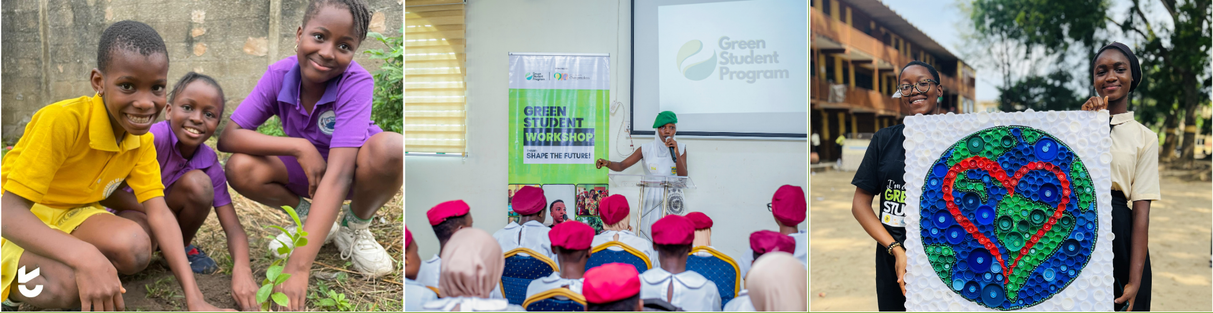
Environmental education is not simply about helping students understand environmental problems. It is about equipping them with the knowledge, skills, values, and confidence needed to build solutions.
Research shows that environmental education can:
Build skills for the future
UNICEF (2021) highlights that climate education helps students develop skills needed for future livelihoods and the growing green economy, while also preparing them to adapt to environmental change.
Create change beyond the classroom
Research by Lawson et al. (2019) found that children often share what they learn with their families, influencing household attitudes and behaviours toward environmental issues.
Strengthen green innovation and employment
Education develops the technical, managerial, and problem-solving skills needed to drive sustainable industries and green growth. The International Labour Organization estimates that the transition to greener economies could create up to 60 million additional jobs globally.
Improve sustainable farming practices
A review by Waddington et al. (2014) found that farmers participating in environmental learning programs reduced pesticide use, lowered environmental impacts, increased crop yields, and improved their income.
Environmental education, therefore, has benefits that extend far beyond environmental protection. It contributes to stronger communities, healthier livelihoods, economic opportunities and a more sustainable future.
So, What Is Environmental Education?
Environmental education is a multidisciplinary learning process that helps individuals understand how natural systems work, how human actions affect the environment, and how environmental changes affect our lives.
Its goal is to build environmental literacy by developing the critical thinking, problem-solving, and decision-making skills needed to live sustainably and respond to environmental challenges.
The United States Environmental Protection Agency defines environmental education as:
“A process that allows individuals to explore environmental issues, engage in problem solving, and take action to improve the environment.”
The Most Important Word: Process
The keyword in both definitions is process.
Environmental education is not simply delivering information about the environment.
It is not a one-time lesson, a presentation, or a collection of facts.
Instead, it is a learning process that helps learners:
- Ask questions
- Explore issues
- Examine evidence
- Consider different perspectives
- Make informed decisions
- Take meaningful action
Environmental education aims to influence how people think, which ultimately shapes how they act.
For example, environmental education is not about convincing students to stop using single-use plastics.
Rather, it involves guiding students to investigate how plastic waste affects their community, explore alternative solutions, weigh different viewpoints, and make informed choices for themselves.
The goal is not to impose a viewpoint.
The goal is to empower learners to think critically, make responsible decisions, and become active participants in creating a more sustainable future.